MA House – Atibaia
- Year: 2025
- Surface: 680m²
- Localization: Atibaia - SP - Brasil
- Project Team: Bruno Rossi, Marilia Giordano Rossi, Adriano Bueno, Isabela Slywitch, Rafael Kenzo, Bruno Castiglioni
- Timber Structure: Ita Engenharia
- Concrete Structure Design: StudioBim Engenharia
- Electrical, Plumbing and HVAC Design: StudioBim Engenharia
- Landscape Design: Cate Poli Paisagismo
- Lighting Design: Denis Joelsons
- Photography: André Scarpa
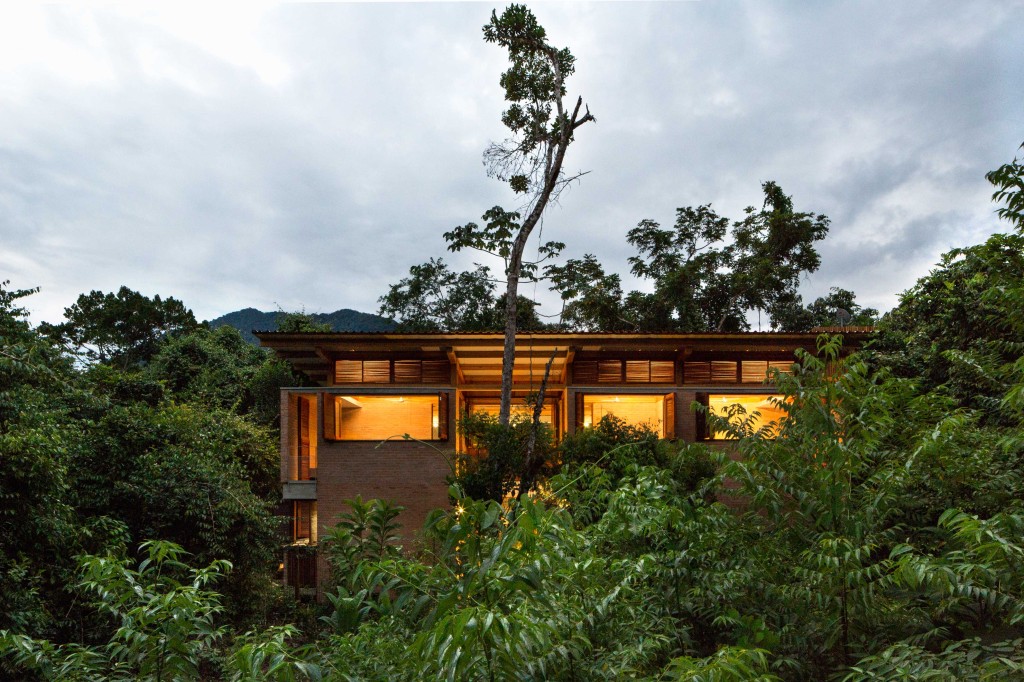
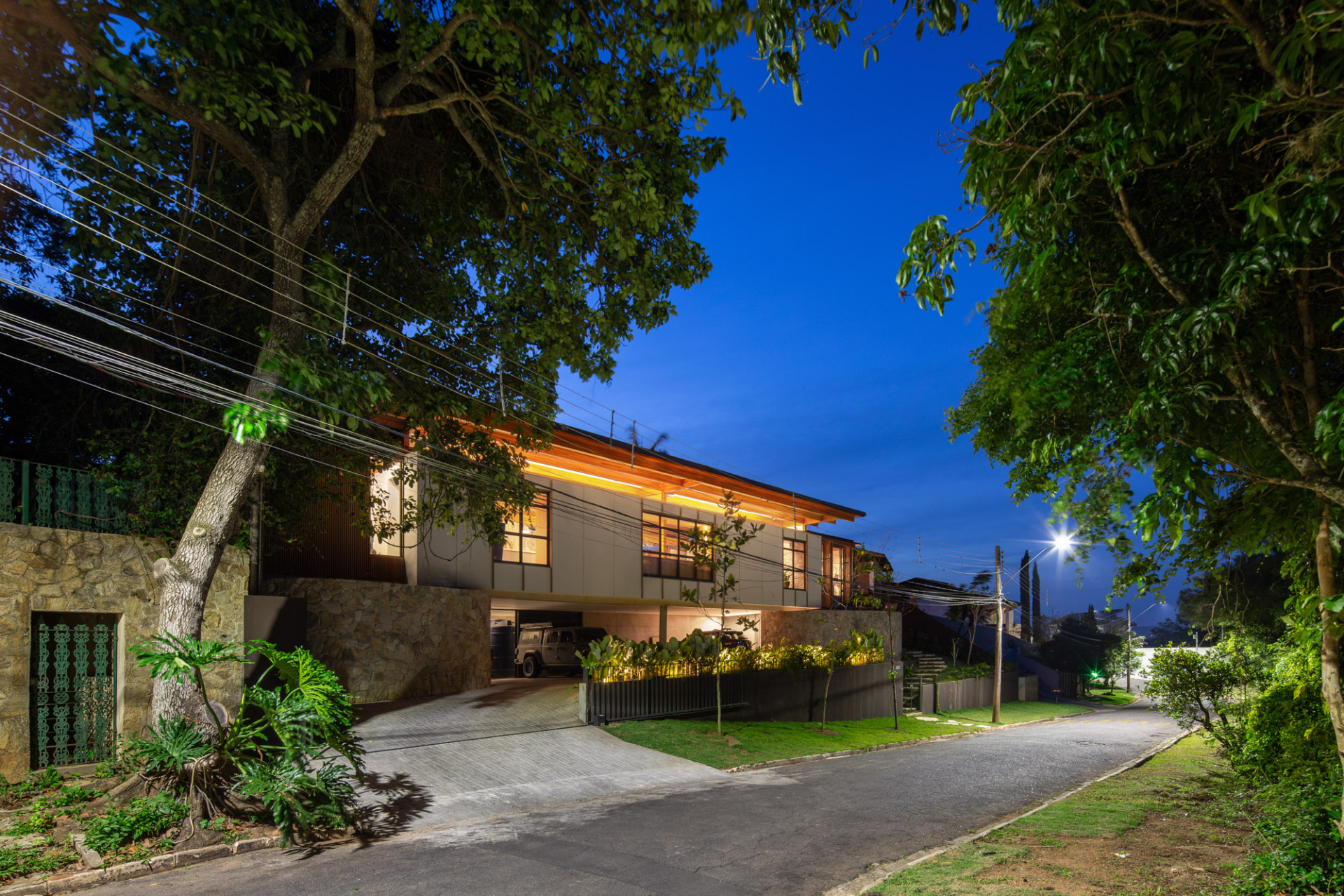
Set on a sloping site within a residential condominium in Atibaia, a mountain town in the countryside of São Paulo state, approximately one hour’s drive from the city of São Paulo, MA House is shaped by a careful reading of the site’s geography, surrounding landscape and domestic program. Conceived as a permanent residence, the house was designed for year-round use, balancing daily functionality with a strong connection to nature.
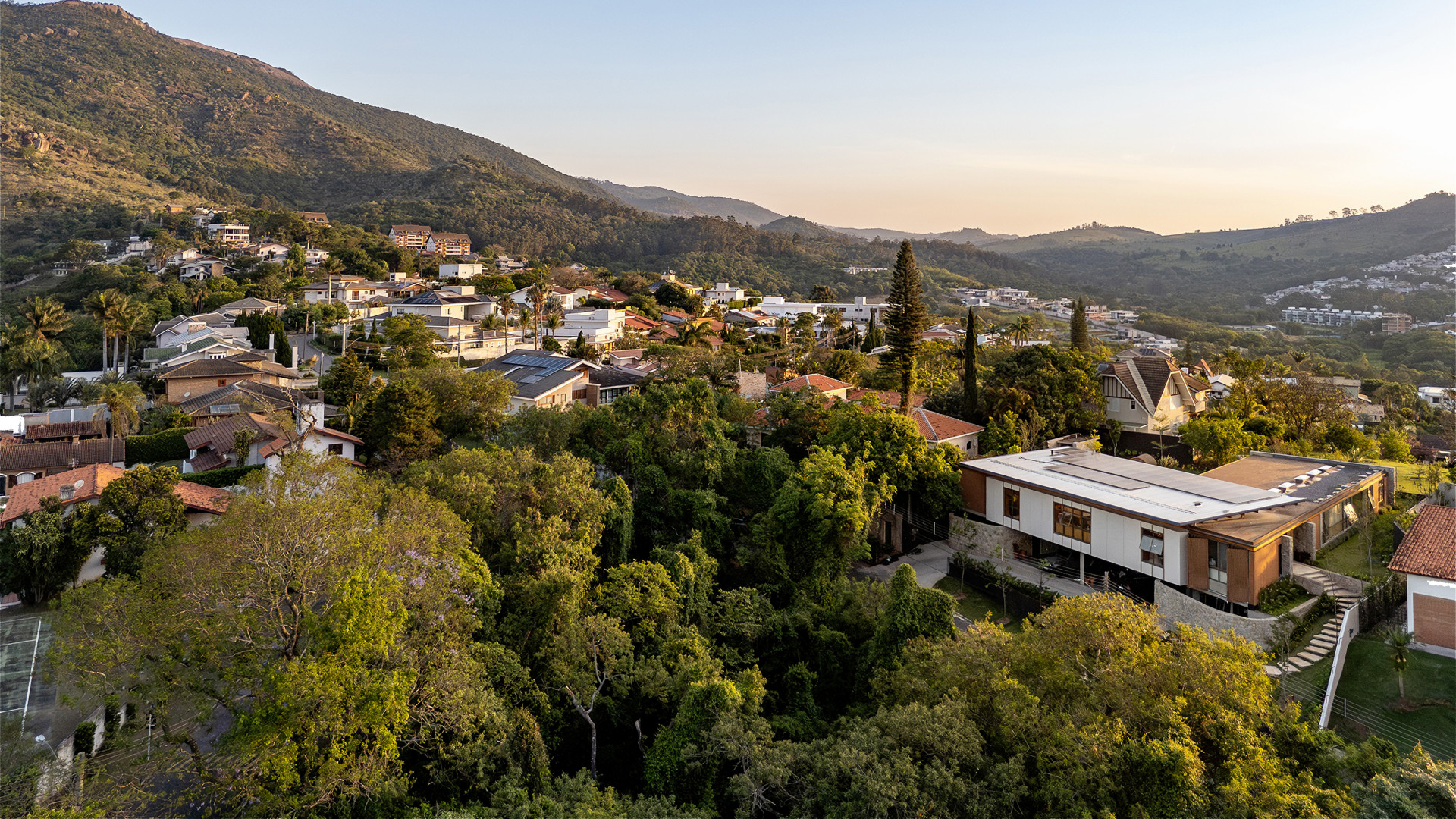

The plot opens onto a permanent preservation area and toward Pedra Grande — a granite rock formation that has become a local landmark and a national reference for climbing and mountain sports in Brazil. For the residents, a couple with four children, three of them already adults, this landscape was part of their routine long before the move. Frequent visitors from São Paulo, they had long used the region as a base for outdoor activities. Their close relationship with the territory and with nature played a decisive role both in the choice of the site and in defining the architectural concept of the house.
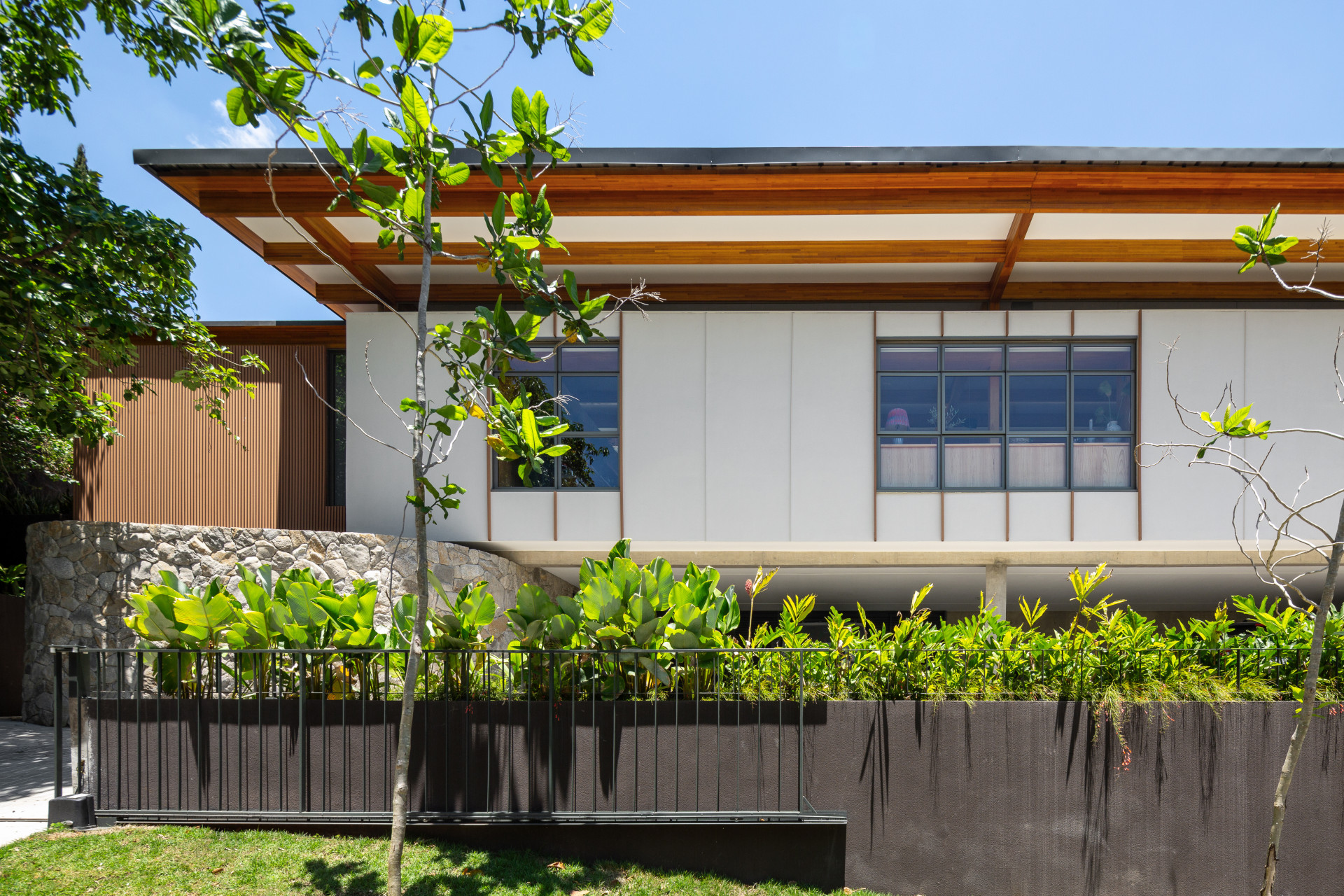
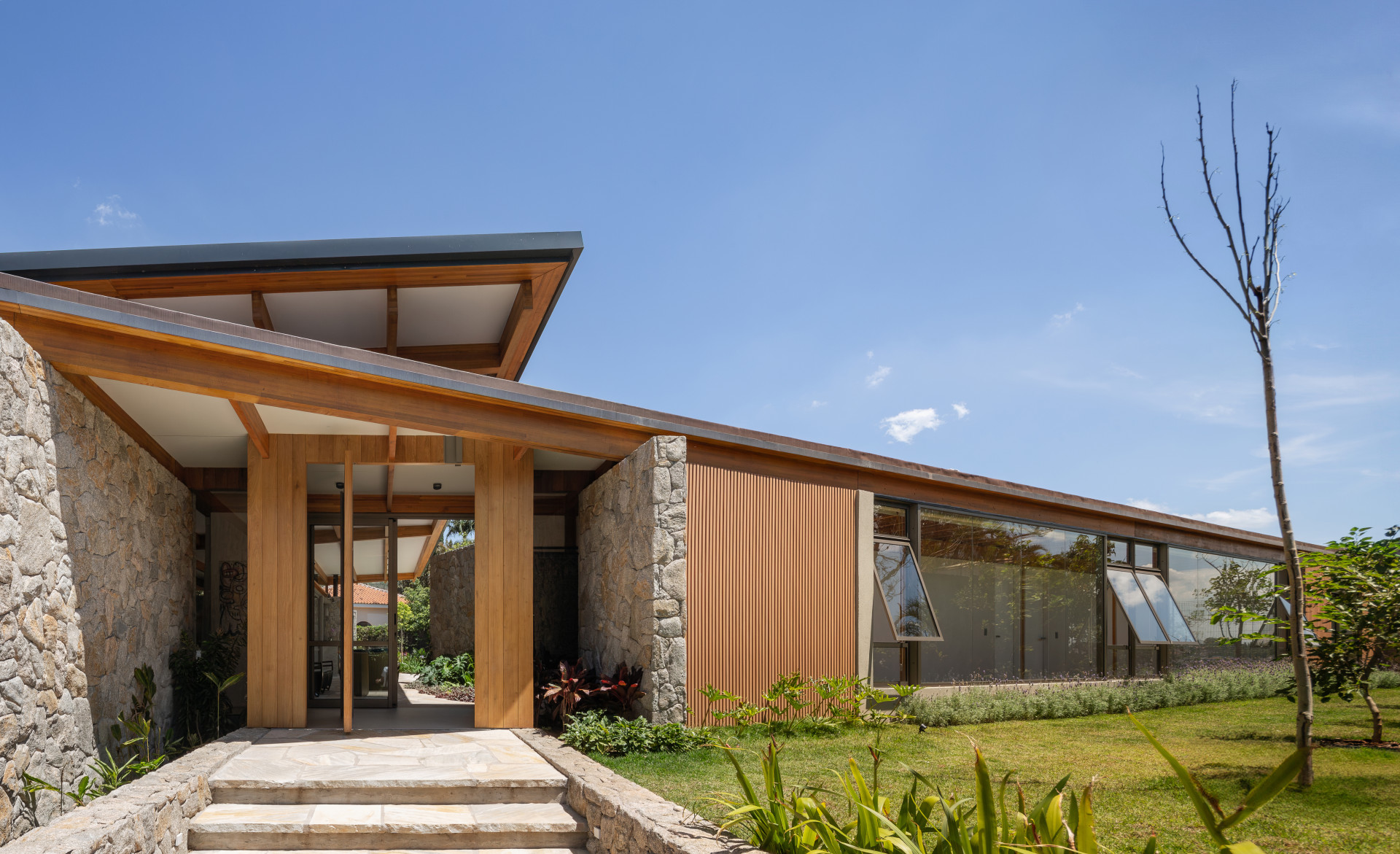
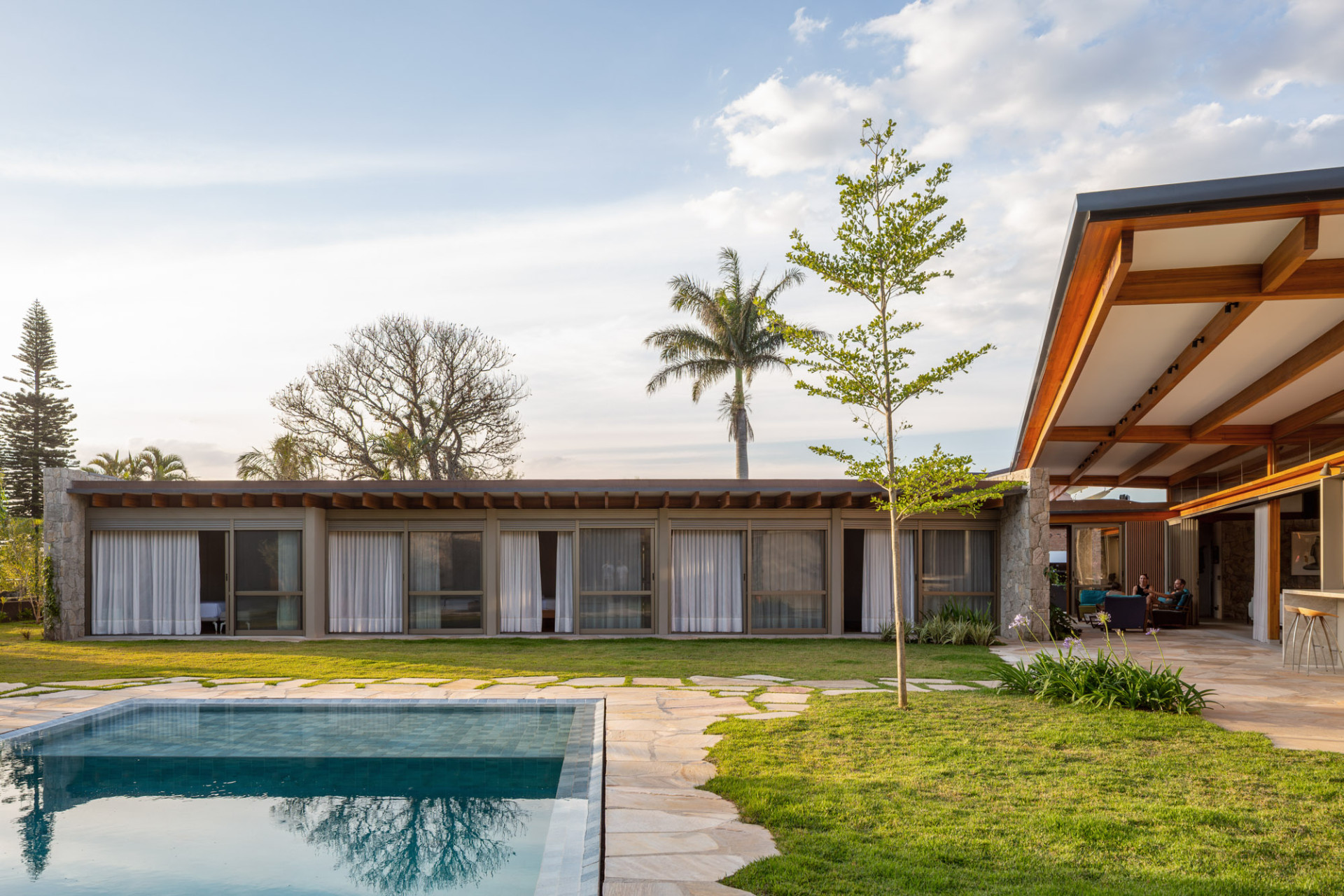
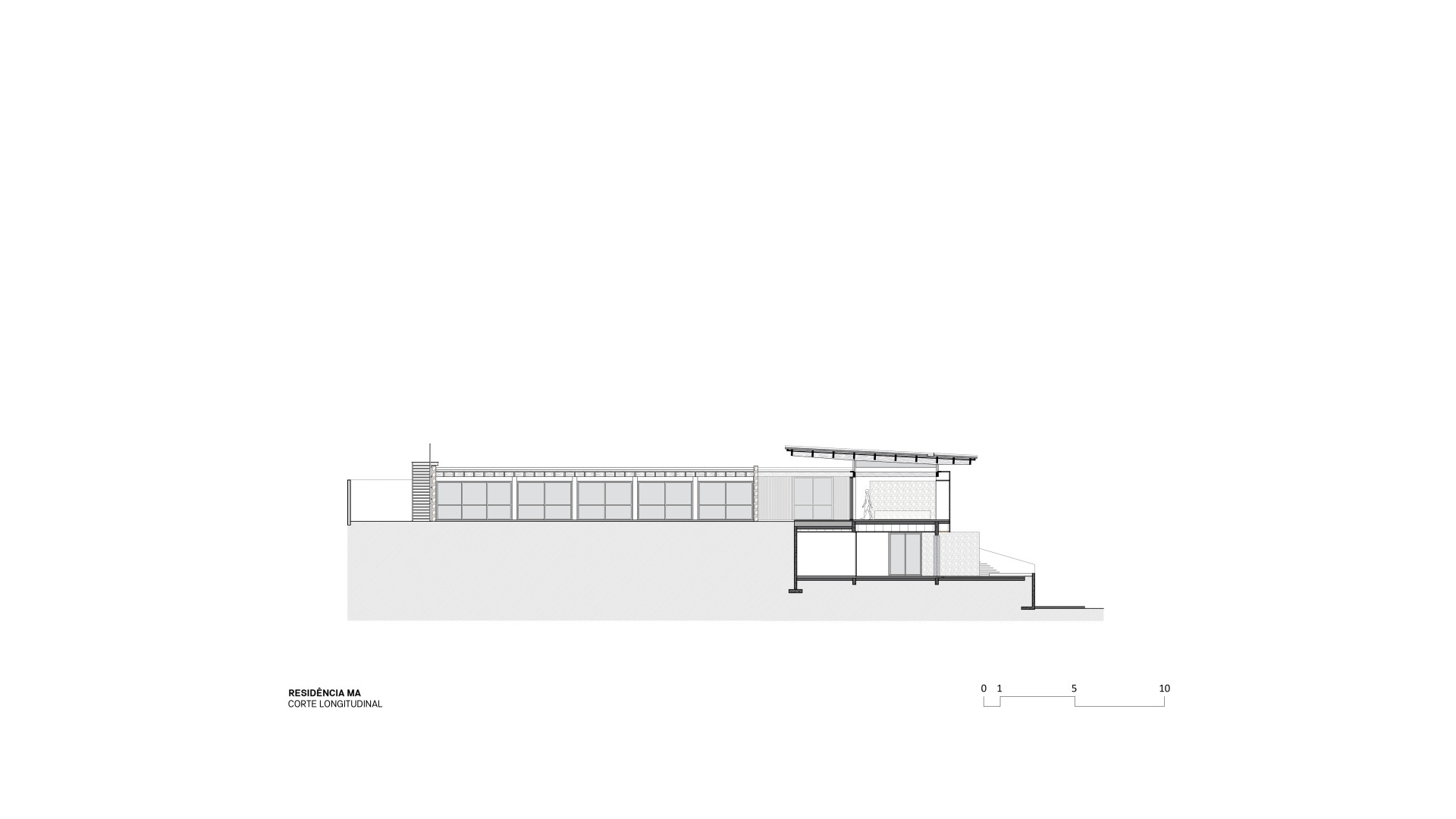
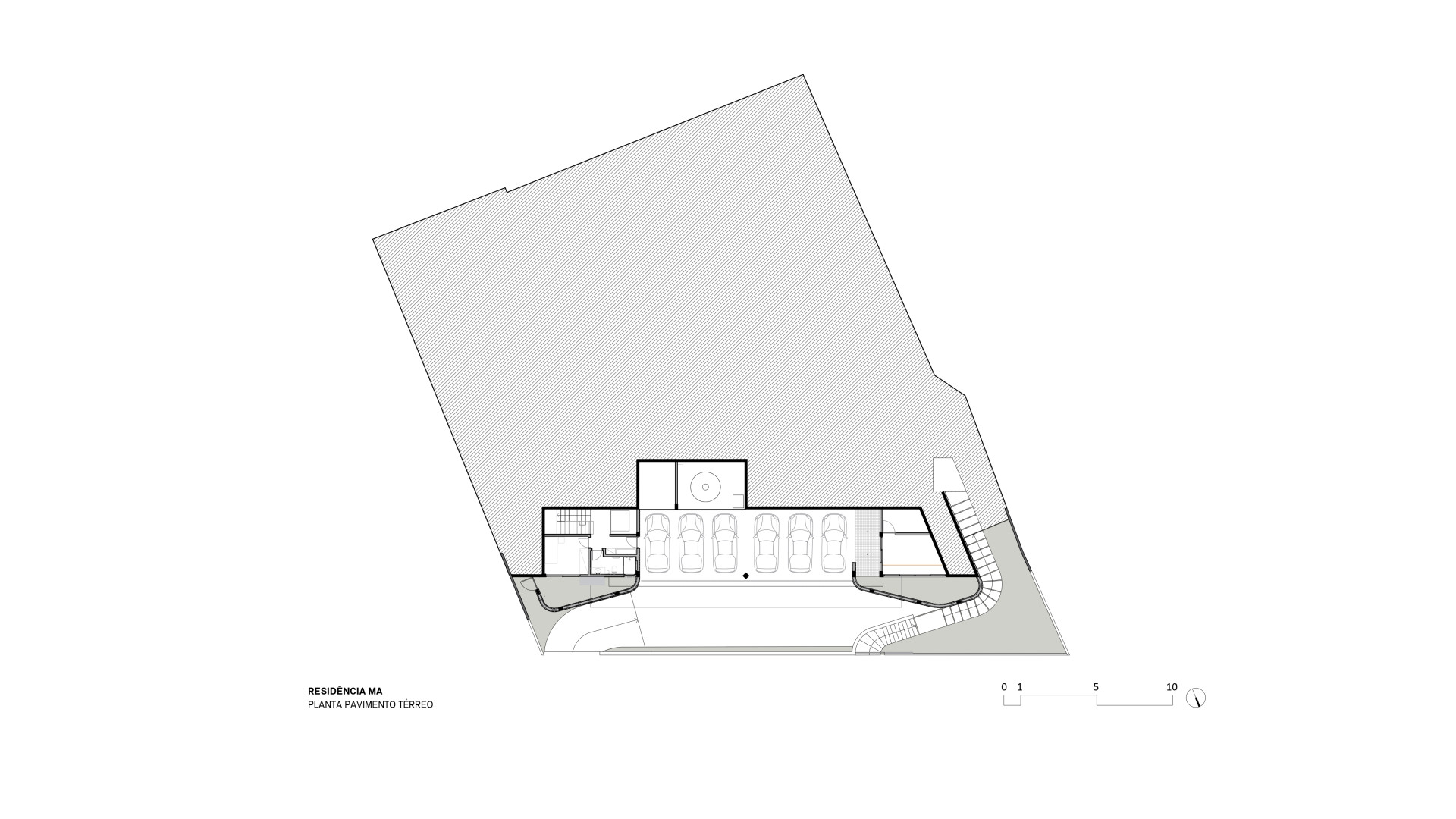
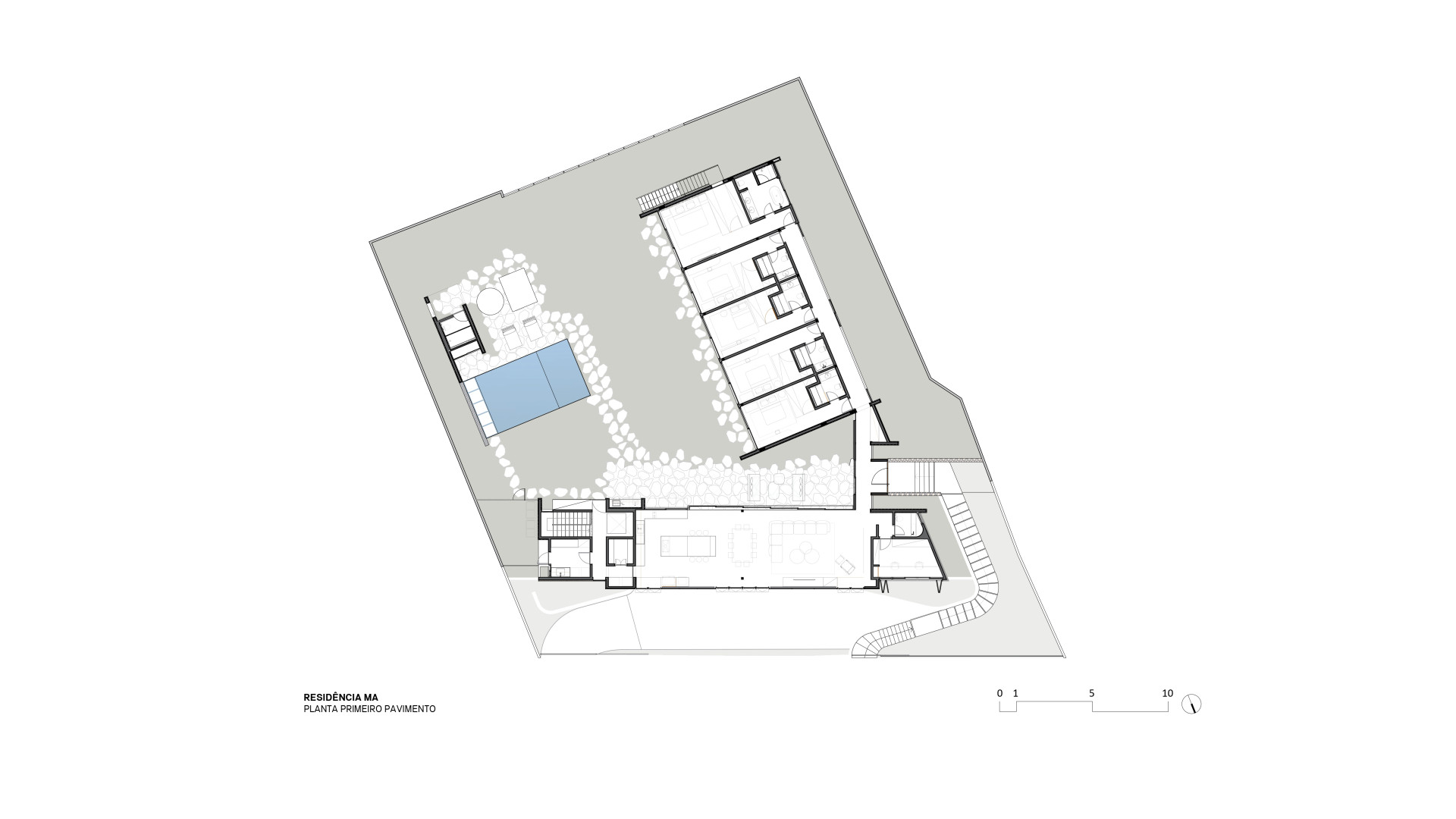
The plot opens onto a permanent preservation area and toward Pedra Grande — a granite rock formation that has become a local landmark and a national reference for climbing and mountain sports in Brazil. Their close relationship with the territory and with nature played a decisive role both in the choice of the site and in defining the architectural concept of the house. . It was essential that spaces flowed naturally into one another, allowing visual connections and shared experiences even when occupied simultaneously. The initial desire for a single-storey, open-plan house guided the first design intentions. However, the site’s steep topography led to the development of a two-level structure, carefully resolved so that the upper floor maintains the perception of a single-storey dwelling.
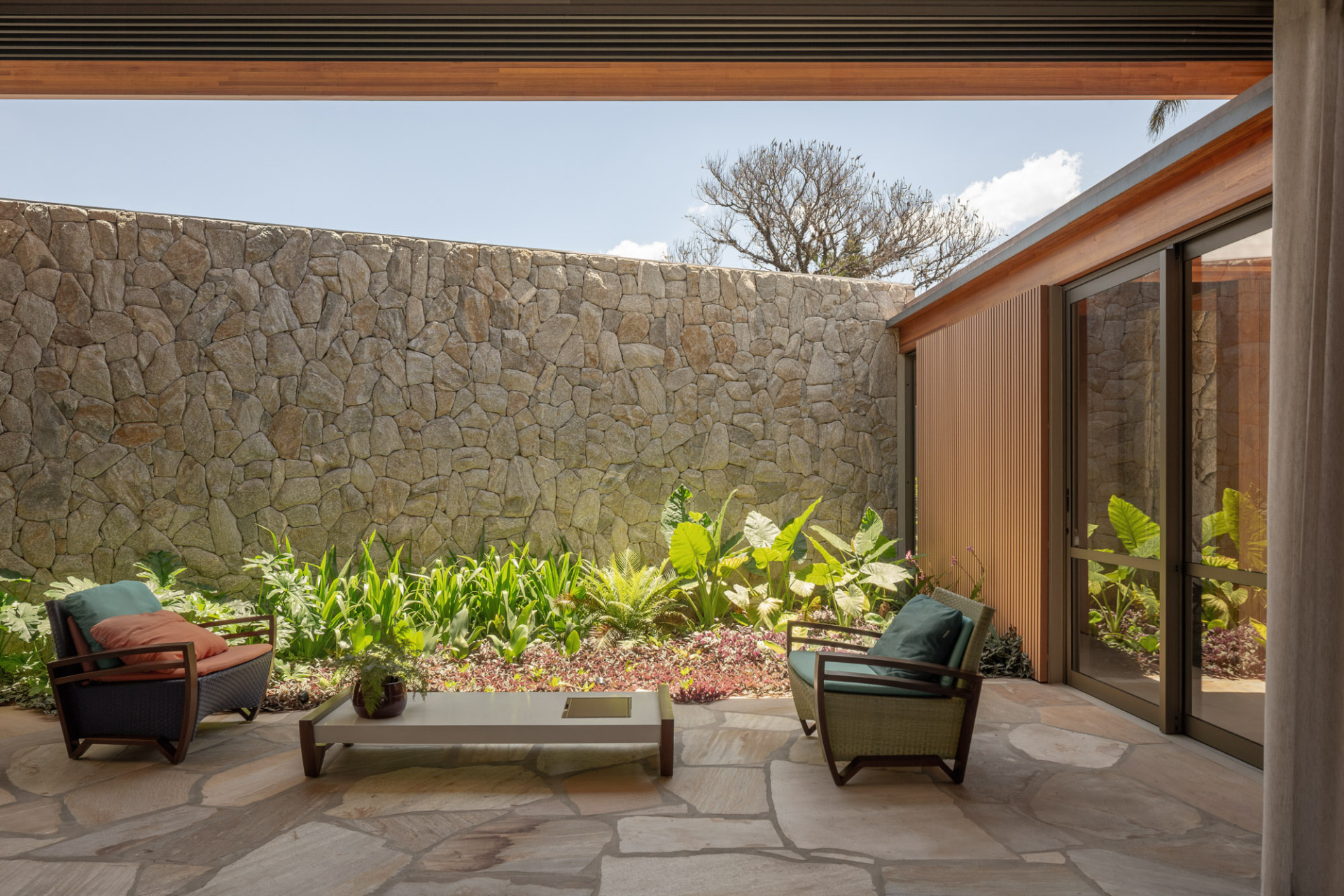
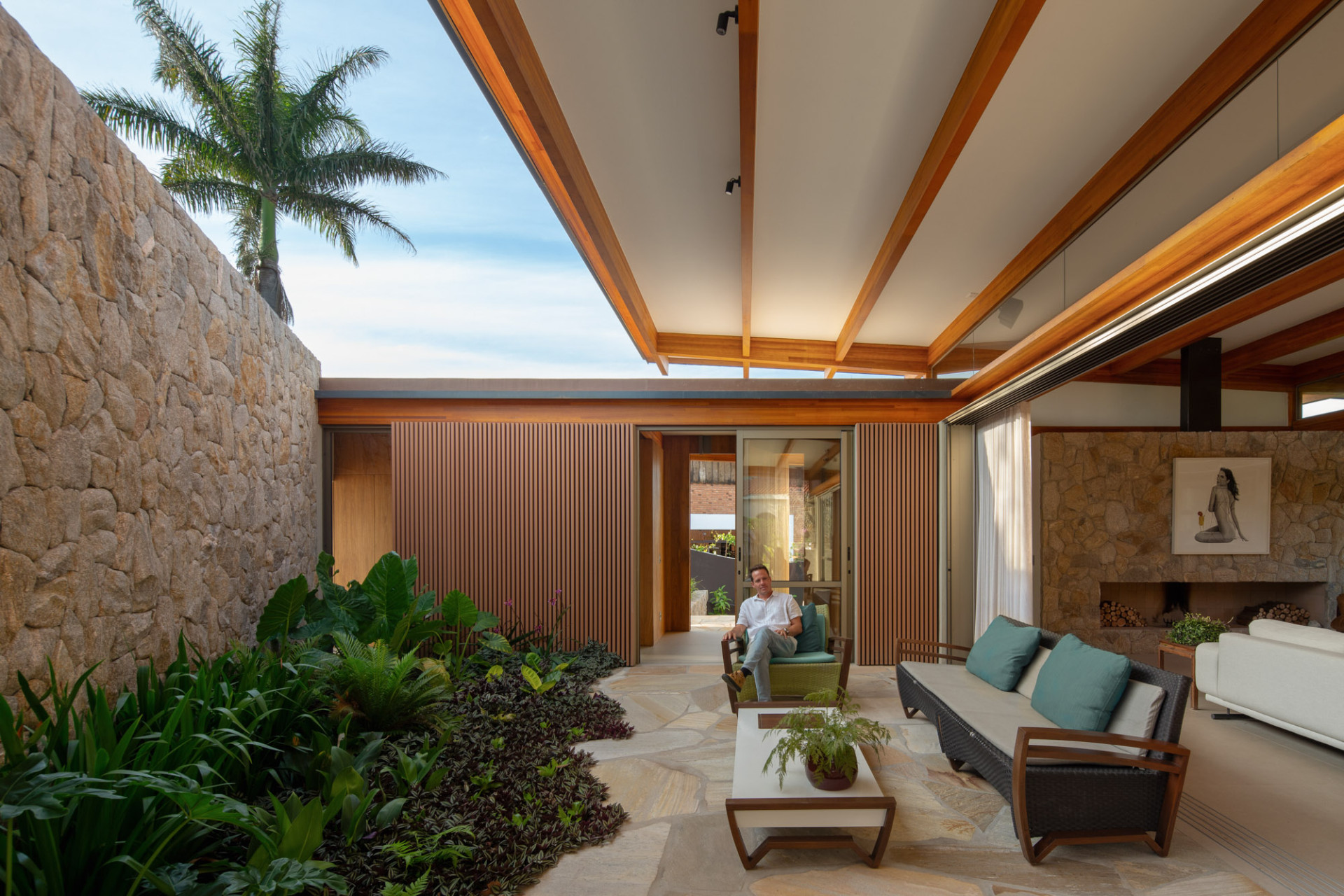
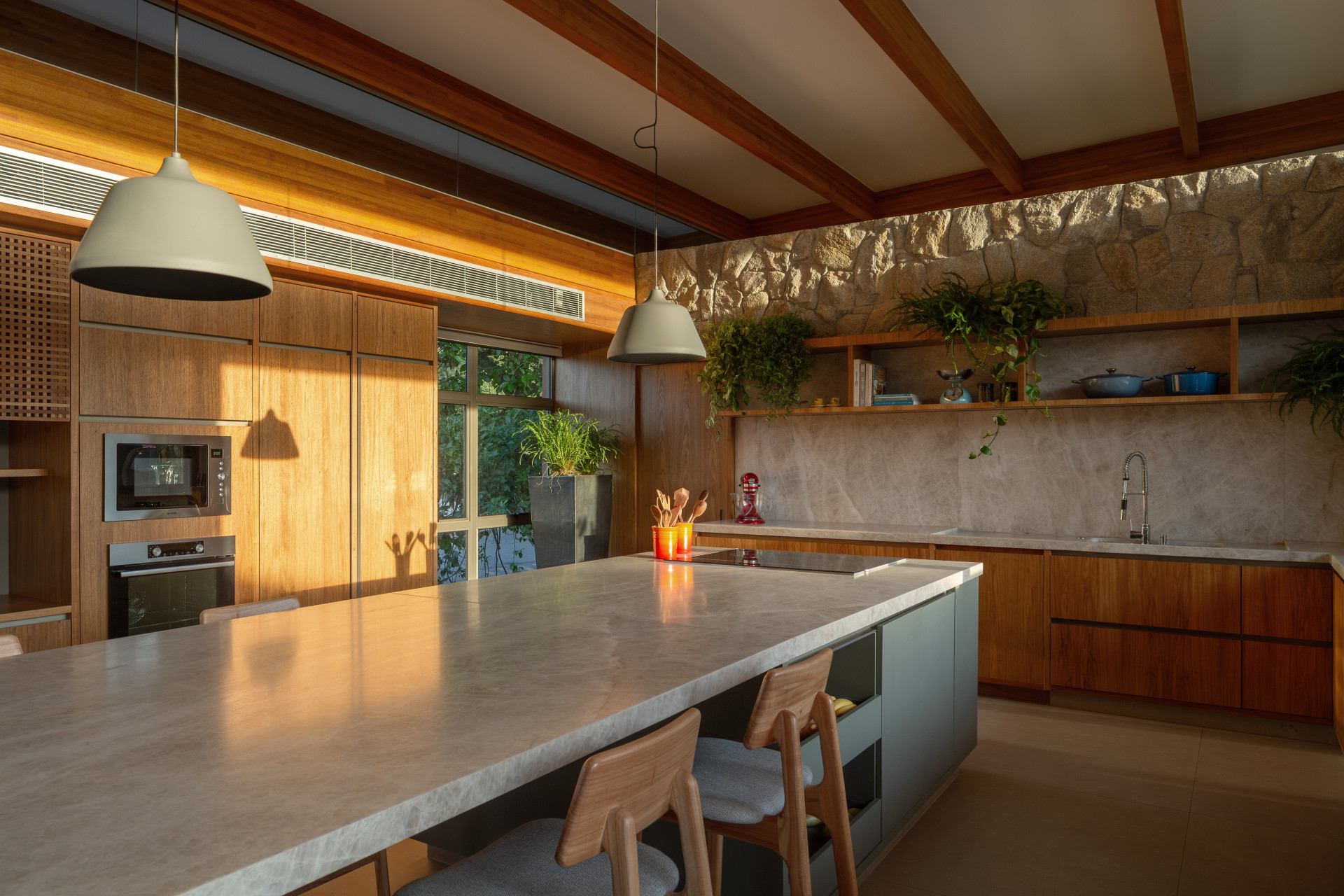
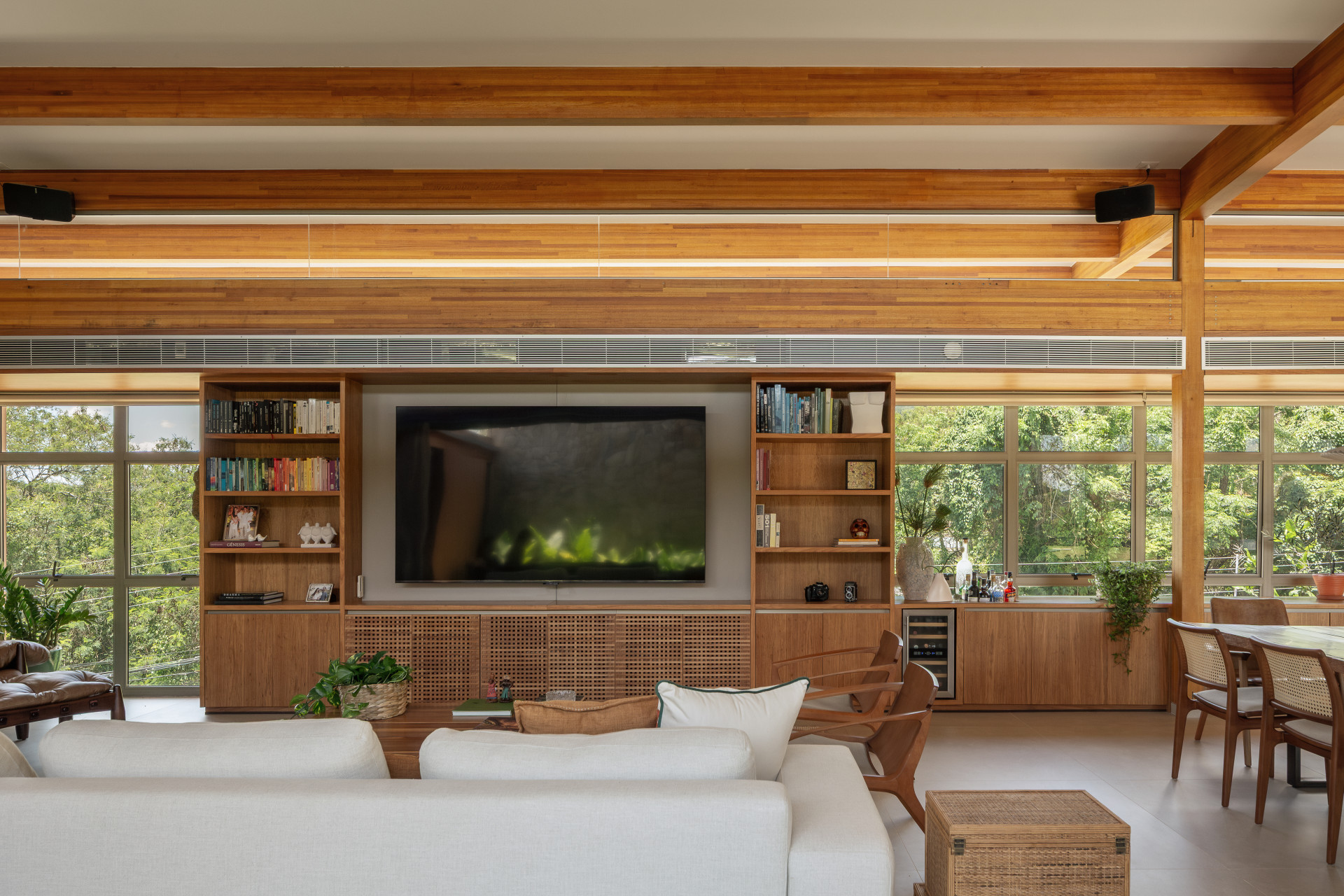
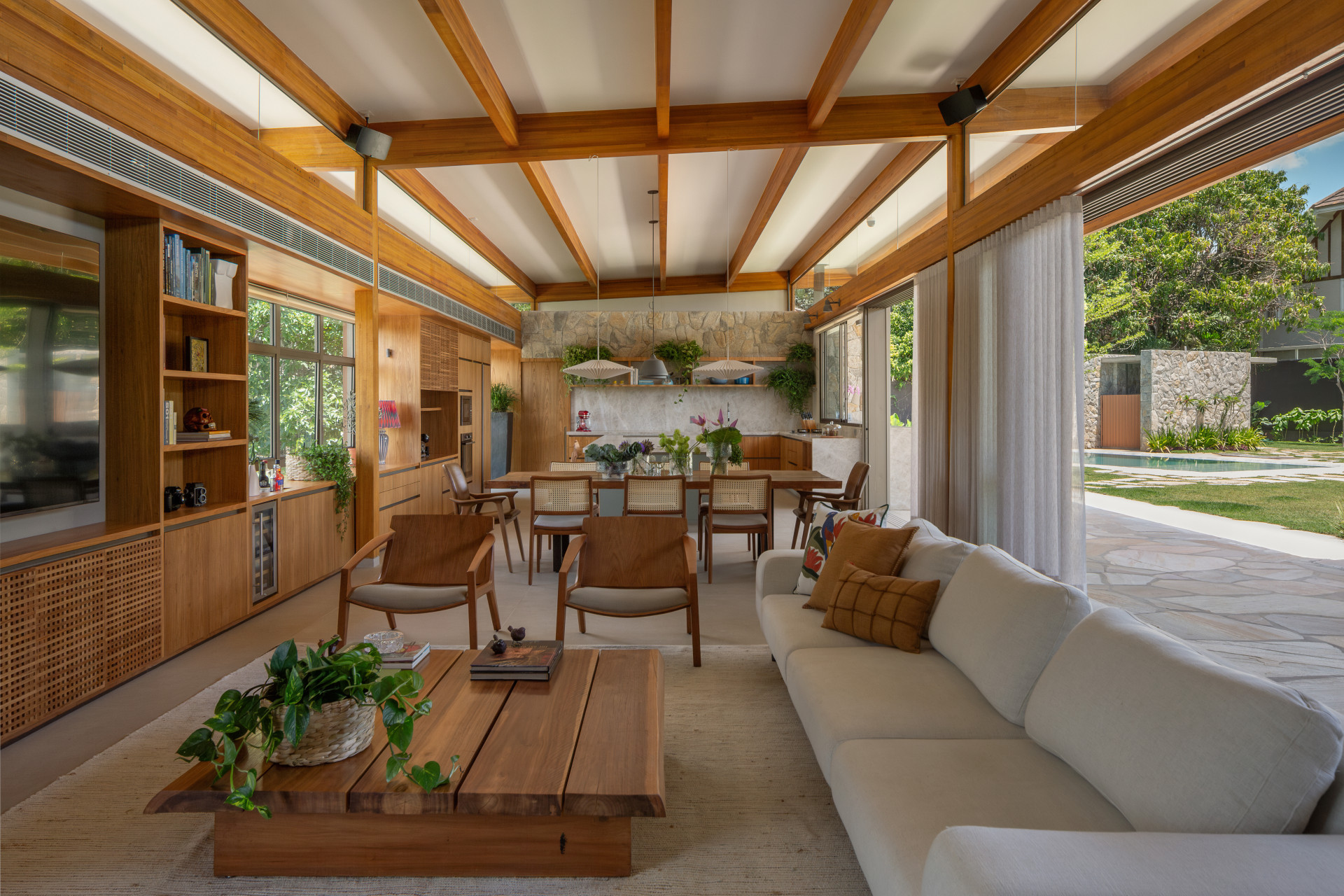
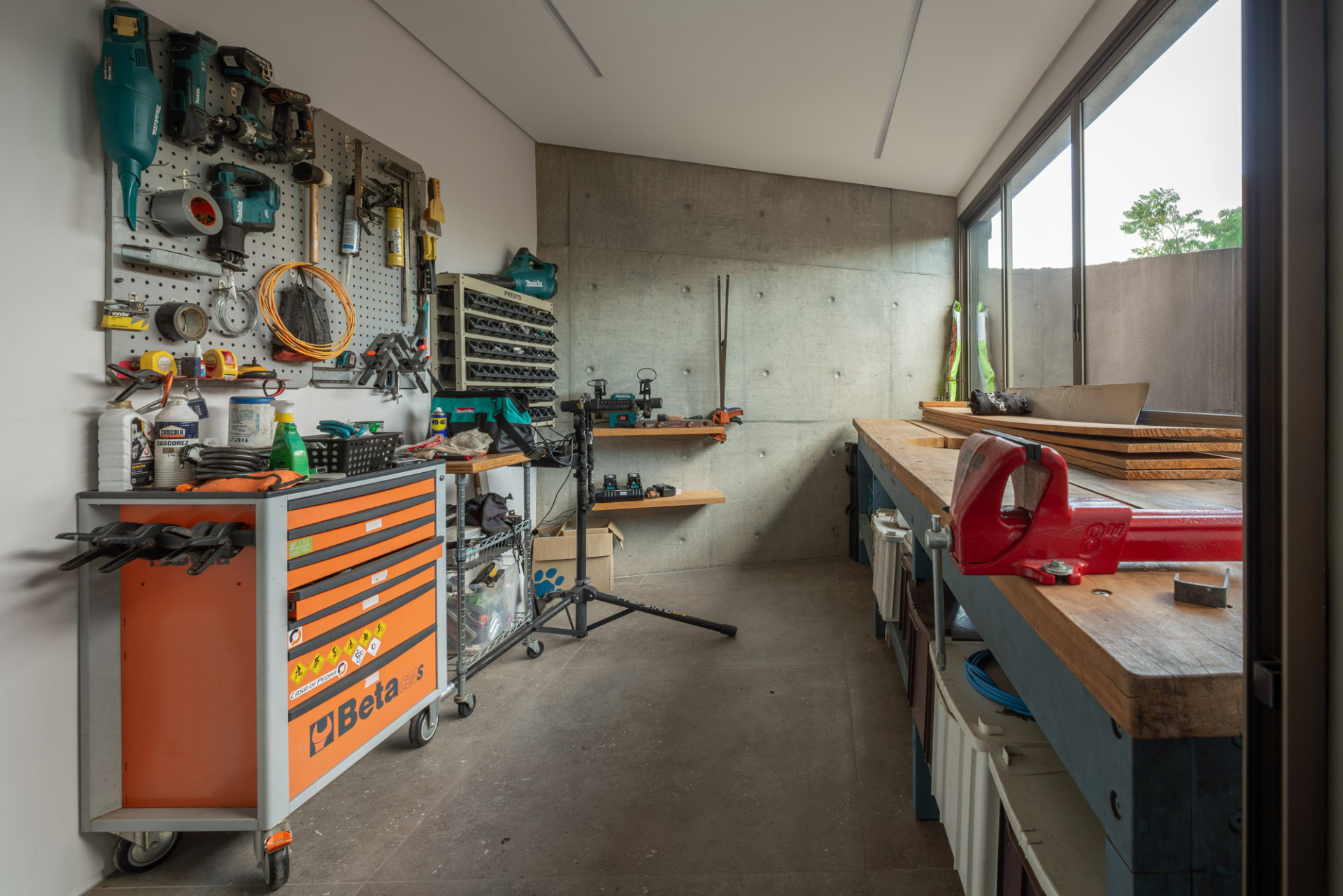
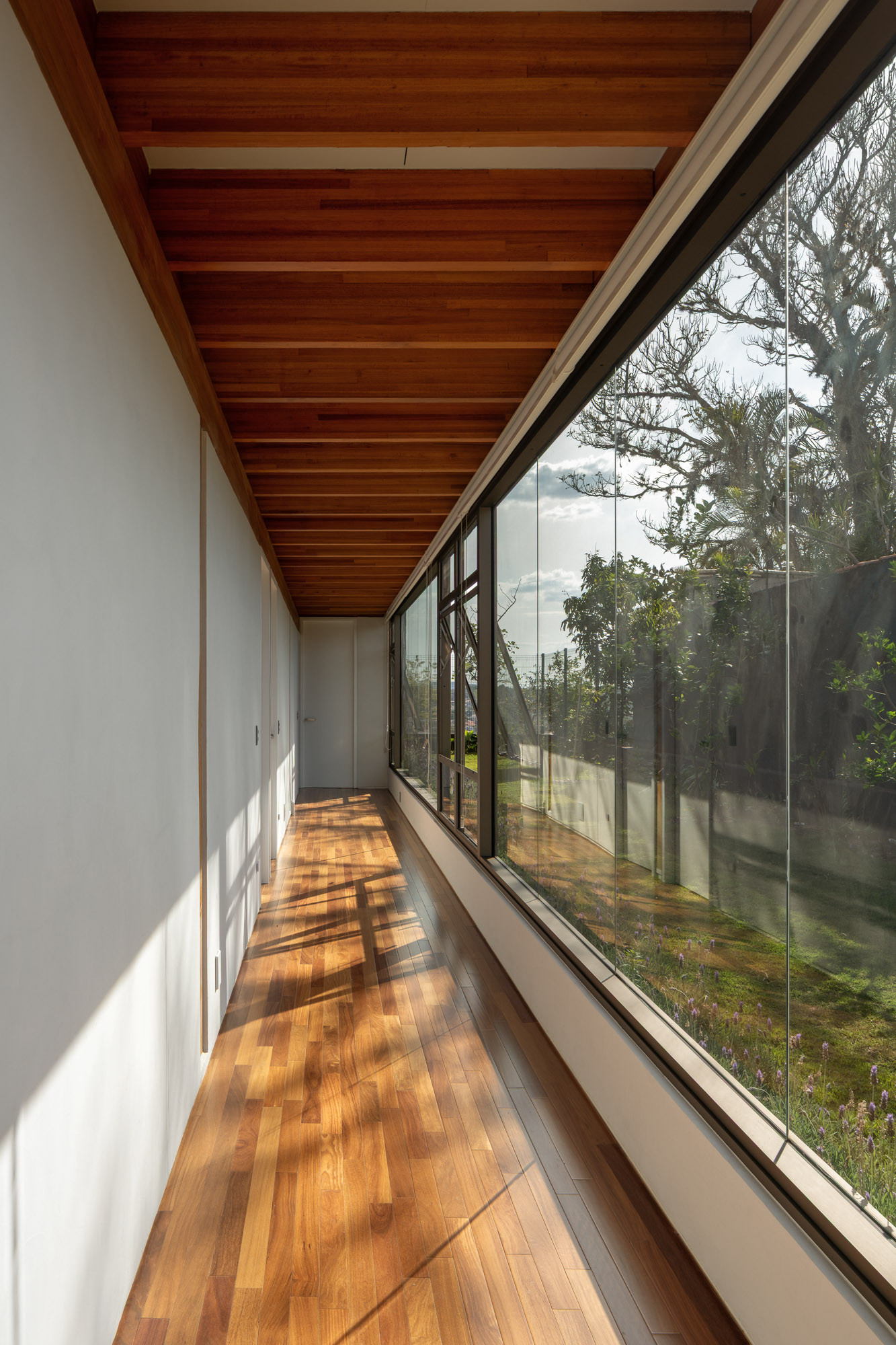
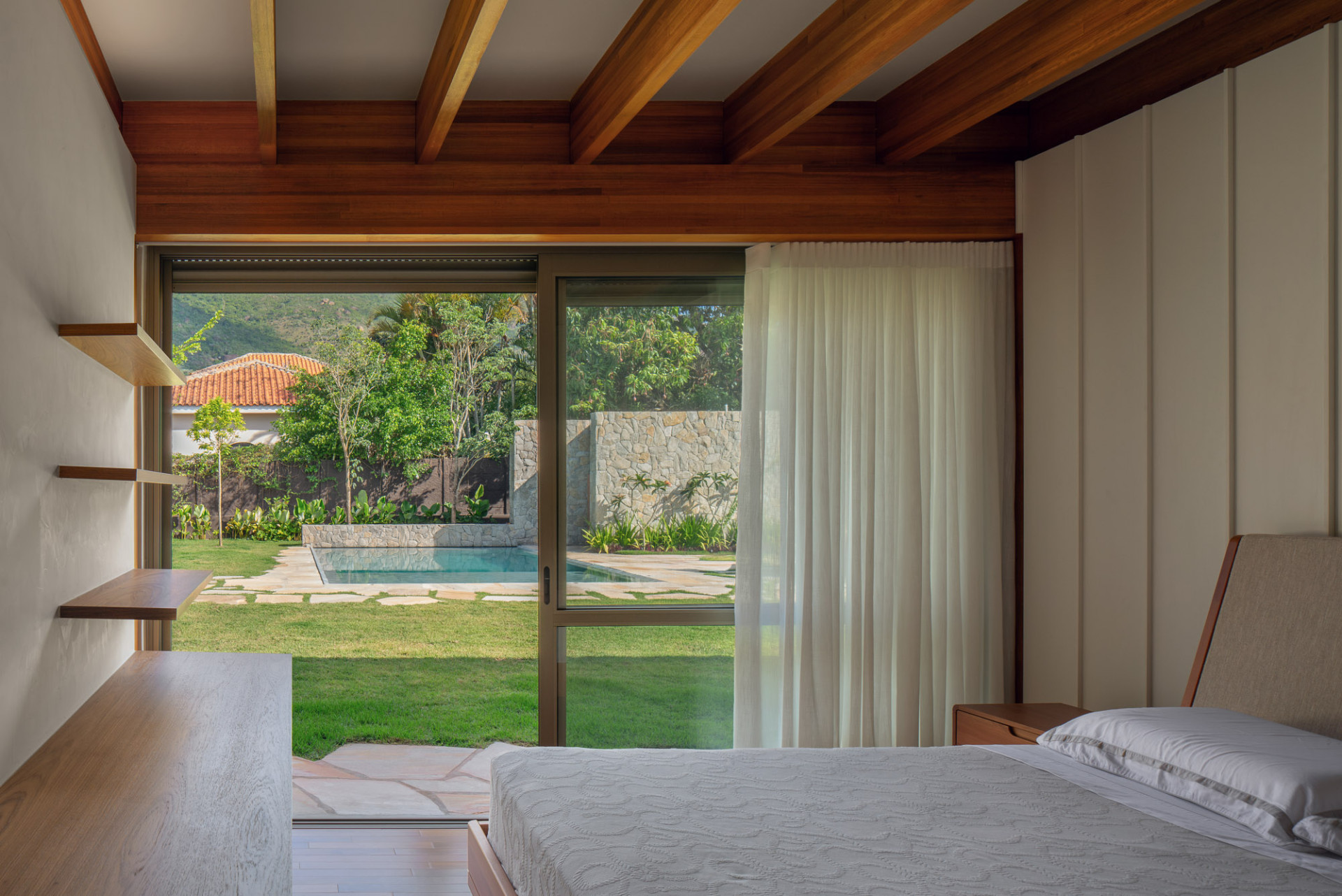
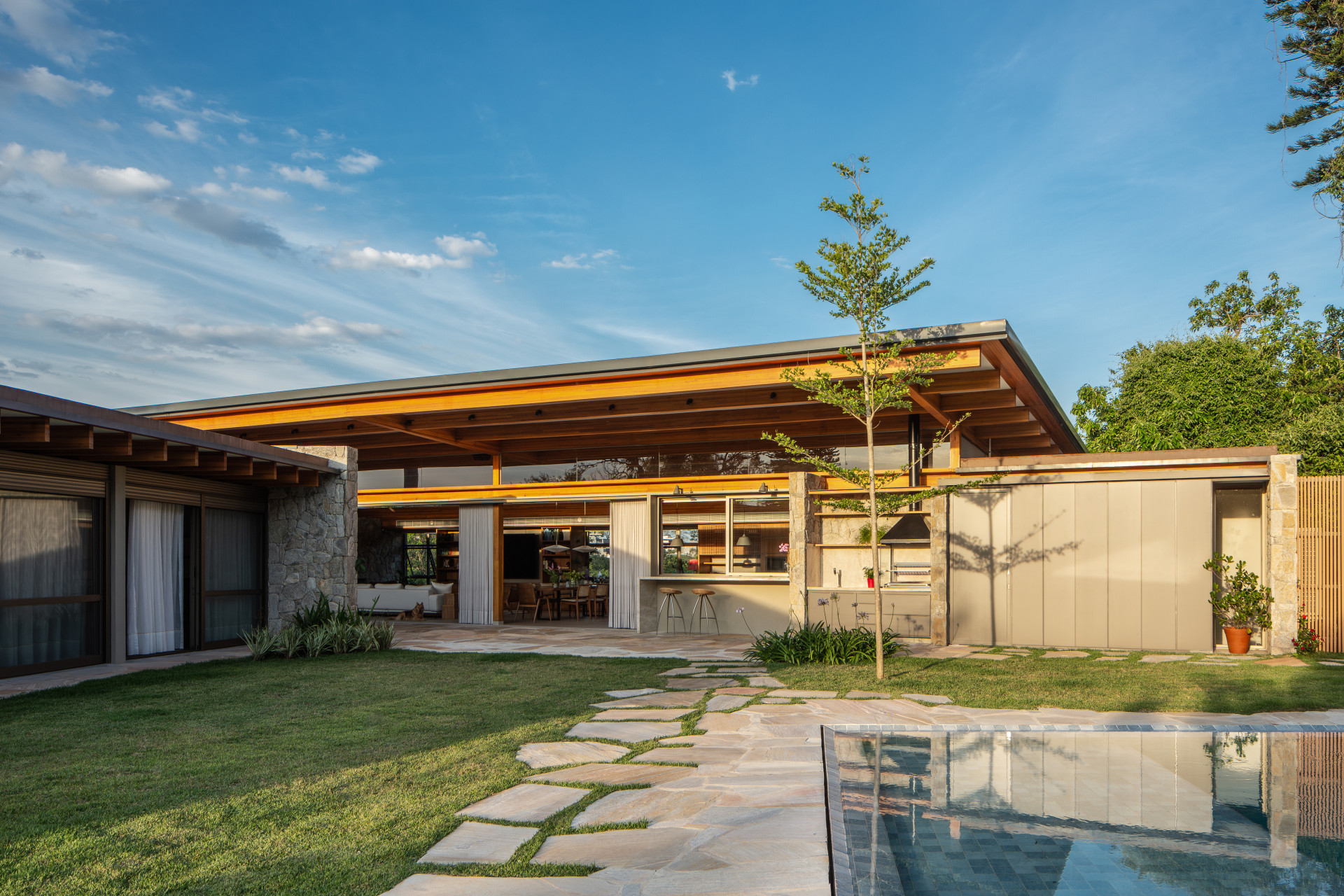
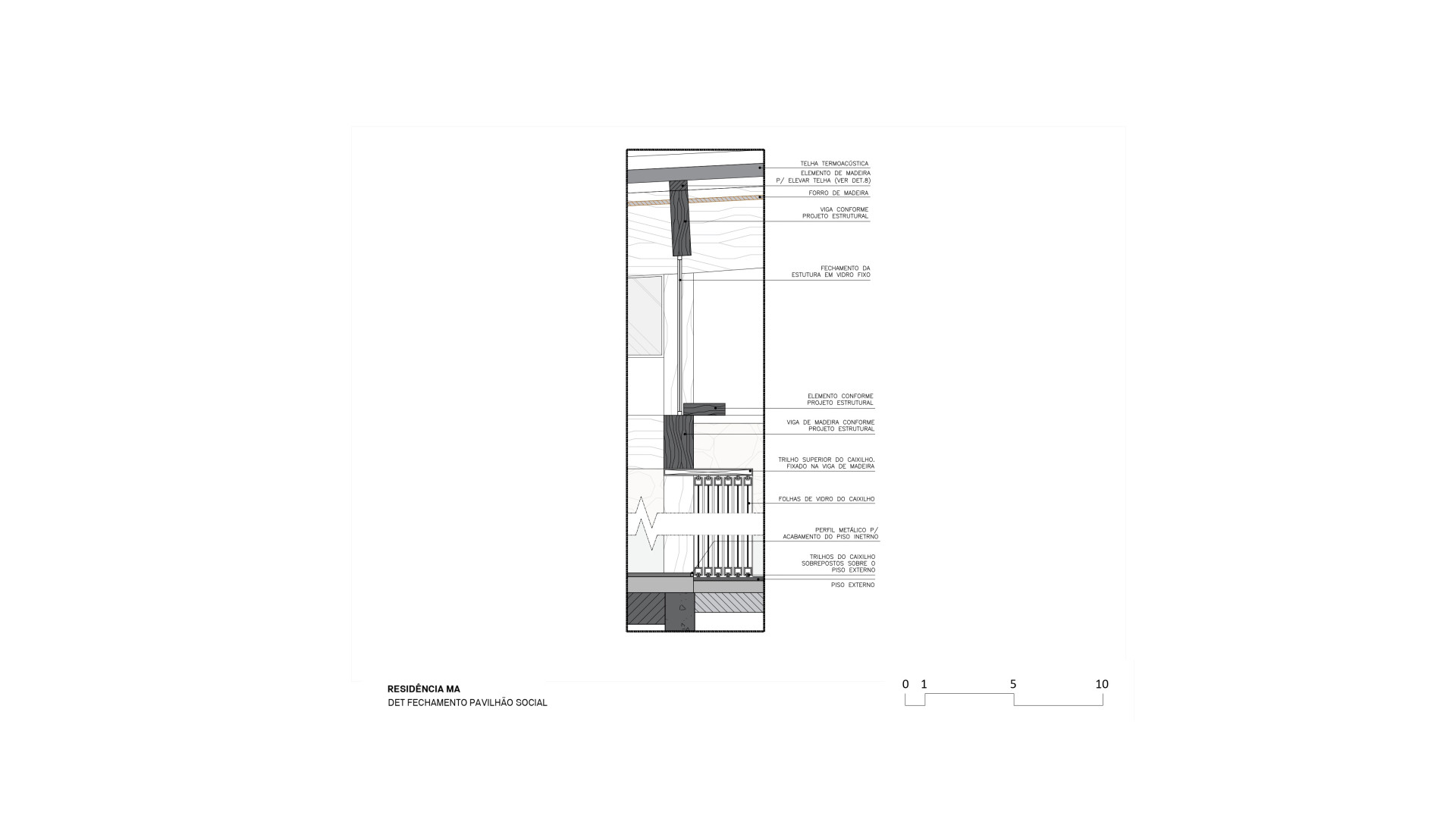
The modular system, organized through a regular grid of columns and beams, allows for large spans, generous openings and spatial flexibility, while reducing material waste and environmental impact. The roof systems are also industrialized, reinforcing the project’s rational and efficient construction approach.
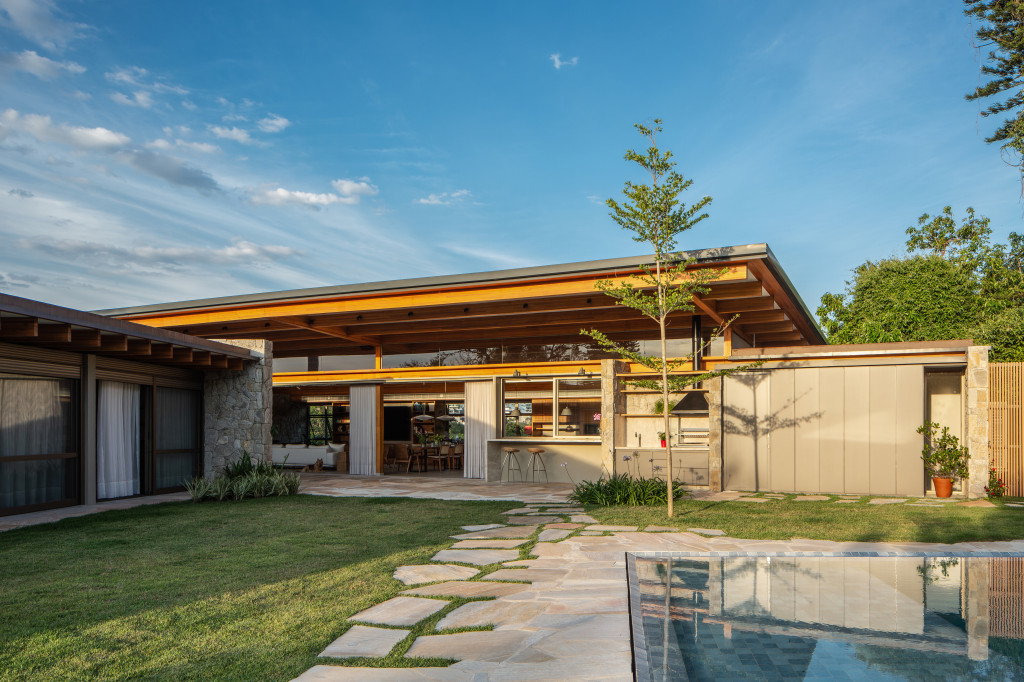
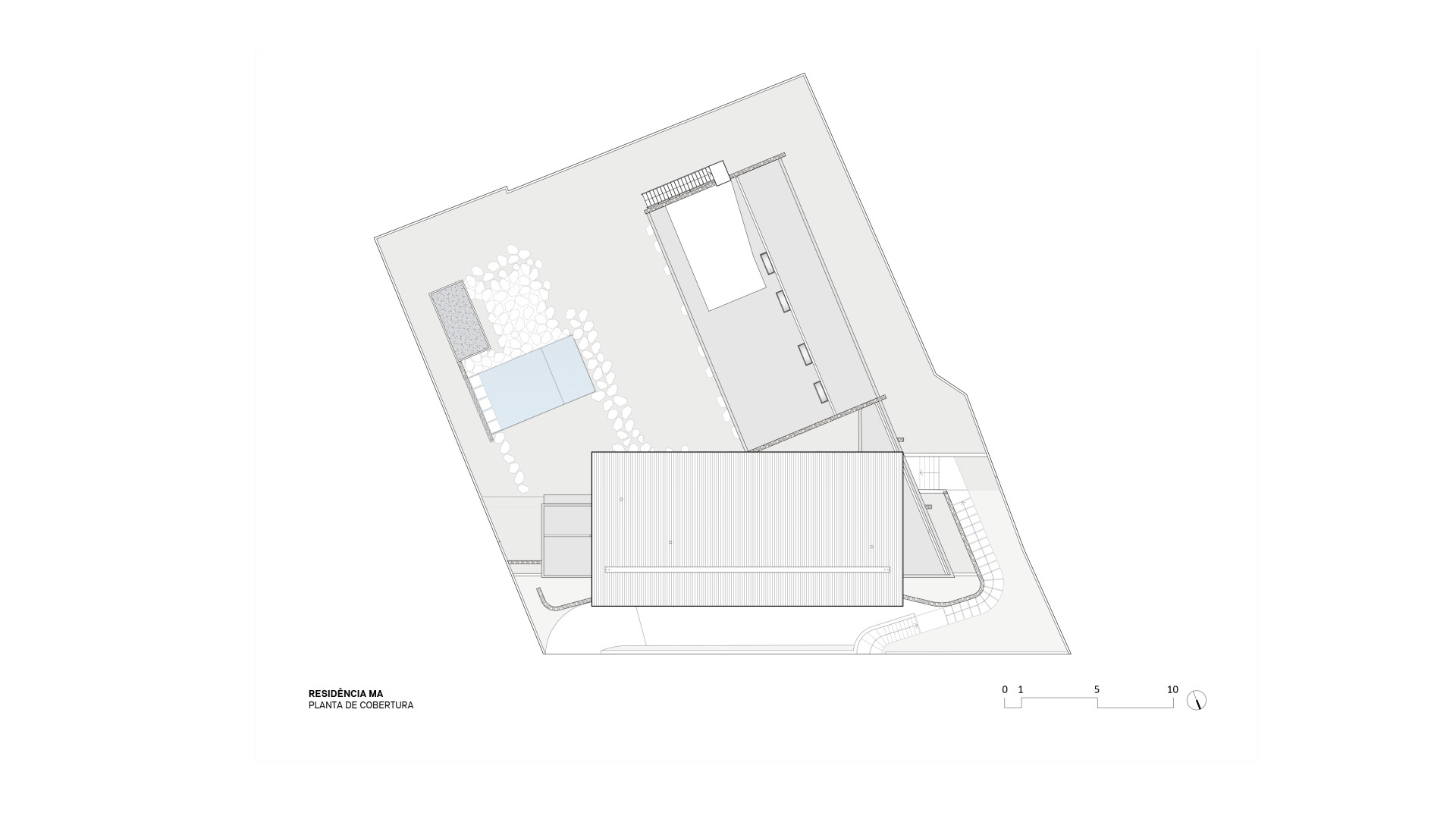
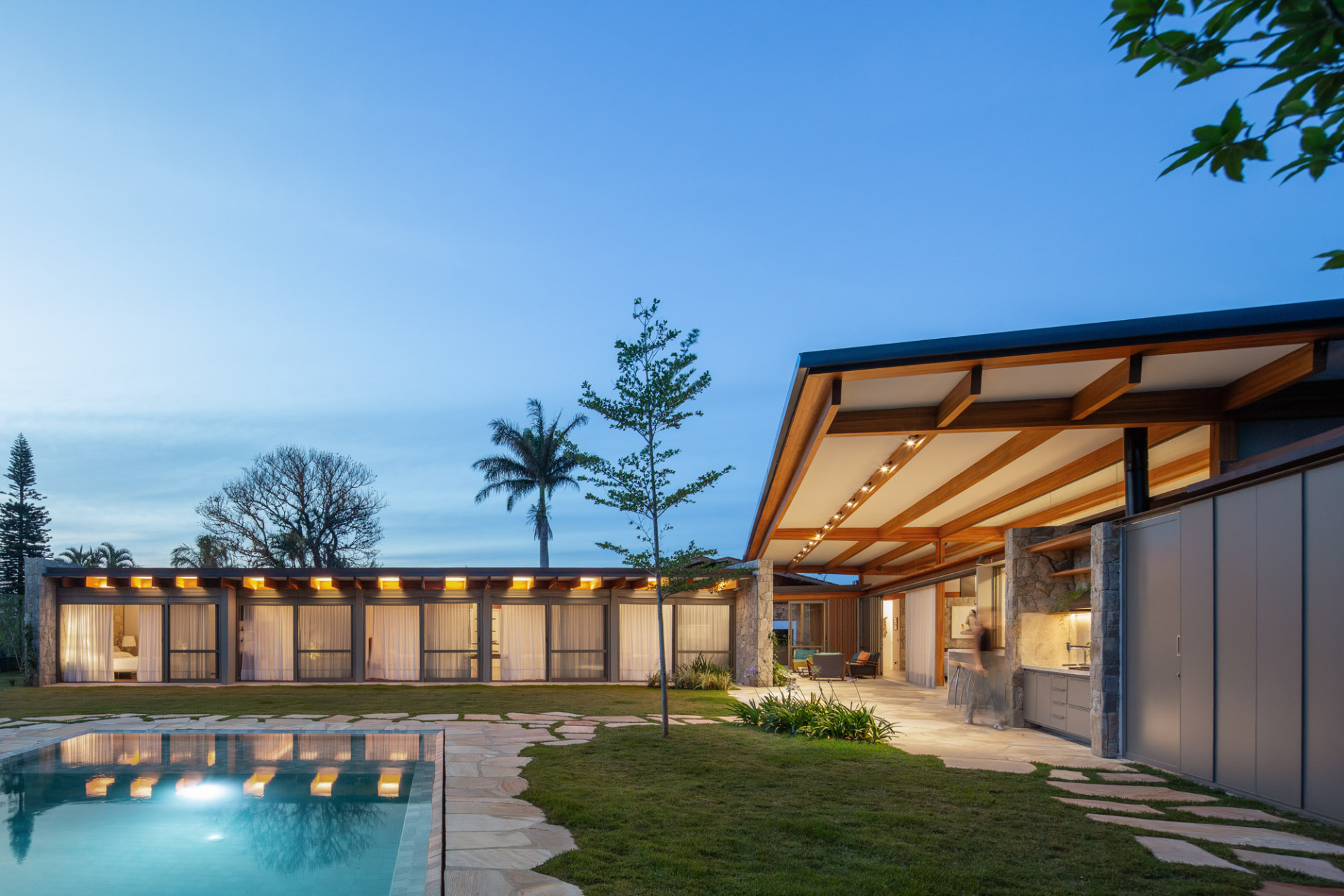
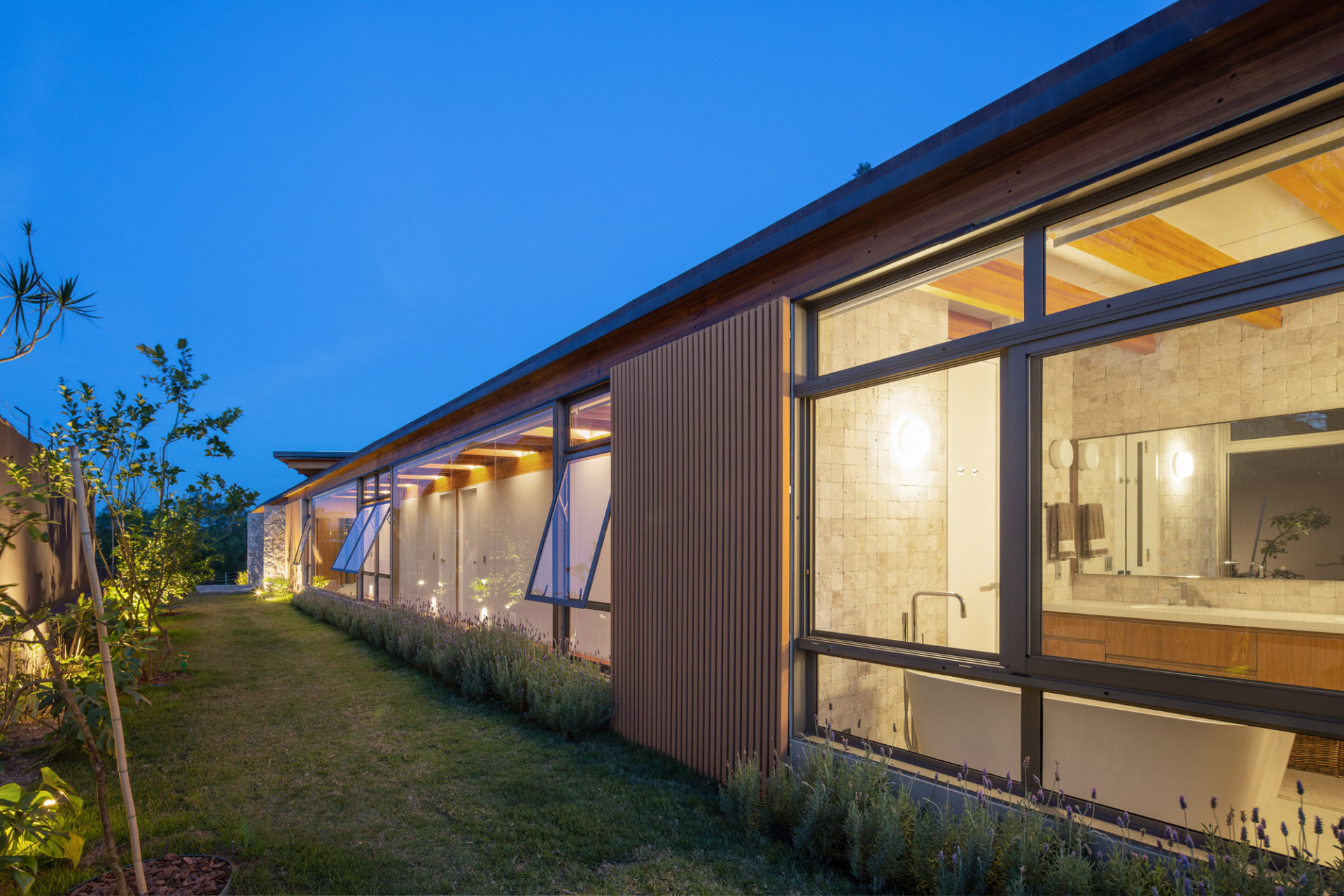
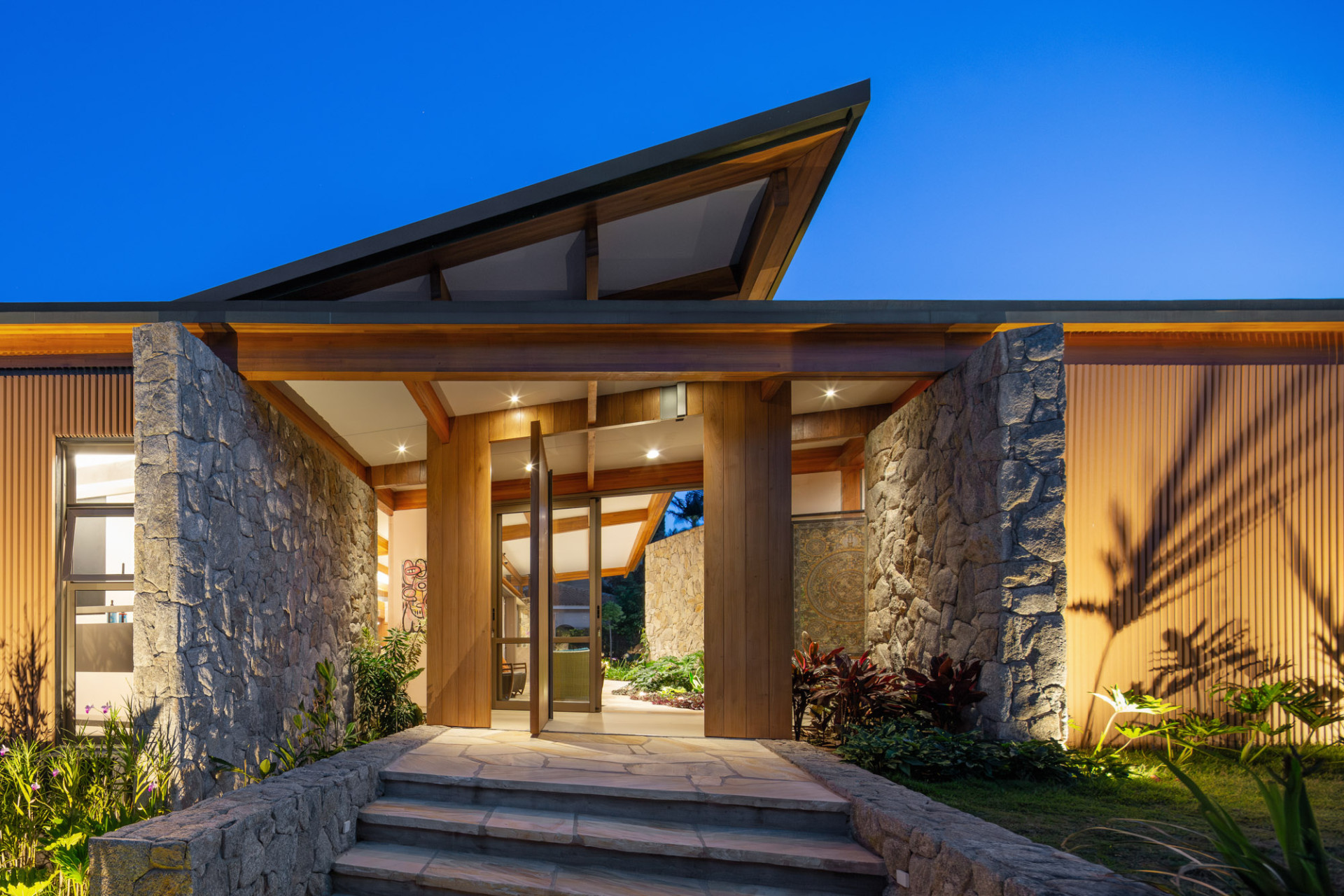
Despite their shared material language, the volumes differ formally. The social pavilion is covered by a pitched roof, enhancing ceiling height and encouraging natural light and cross-ventilation, while the second pavilion adopts a flat roof. The two are connected by a transitional roof plane that marks their intersection and organizes circulation.





Related projects